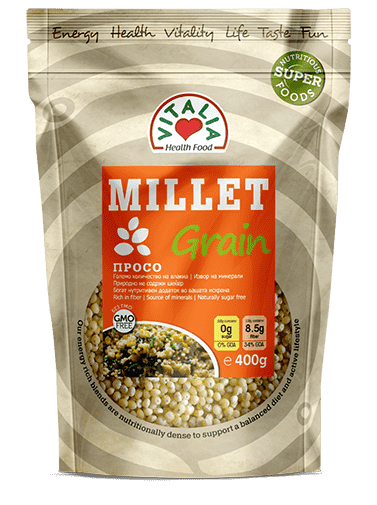
It contains carbohydrates, proteins, fats, minerals (iron, magnesium, phosphorus, potassium, calcium and iodine), vitamins (B complex), sodium and essential amino acids. Millet is recommendable for people having problems with the stomach, pancreas and spleen. Eating millet, at least 2-3 times a week, provides excellent protection for the cardiovascular system and against diseases of the intestines. It has a protective role against sneezing, flu and bronchitis. It restores human cells, helps in intellectual work and prevents fatigue and depression. Millet boiled with milk or soup is healthy food for strengthening the immune system.
Millet Grain
nutritious, diet, vegan, fibers, plantprotein, seeds,It contains carbohydrates, proteins, fats, minerals (iron, magnesium, phosphorus, potassium, calcium, and iodine), vitamins (B complex), sodium and essential amino acids.
Allergens:
May contain traces of soy, gluten, sesame and nuts.
| Nutrition Information | 100g |
|---|---|
| Energy | 378/1583 kcal/kJ |
| Fat | 3.6 g |
| of which saturates | 0.7 g |
| Monounsaturated fatty acids | 0.8 g |
| Monounsaturated fatty acids | 2.1 g |
| Carbohydrates | 56 g |
| of which sugars | 0 g |
| Fiber | 8.5 g |
| Proteins | 11 g |
| Salt | 0.012 g |
| Calcium | 8 mg(0.8%)* |
| Magnesium | 114 mg(28.5%)* |
| Phosphorous | 285 mg(28.5%)* |
| Iron | 3 mg(16.7%)* |
| Zink | 1.7 mg(11.3%)* |
"Fibers"
"Proteins"
"Fats"
Millet
Millet is a nutritionally valuable grain, which contains an abundance of minerals such as calcium, potassium, zinc and iron as well as B vitamins. It is also a great source of protein and unsaturated fats.